

Seeing blood in your urine can be alarming. Whether the urine appears red, pink, or tea-coloured — or blood is discovered only during a routine urine test — the experience raises understandable concern.
The important message is this: blood in urine (hematuria) does not always mean cancer, but it should never be ignored. It can be the earliest warning sign of a serious kidney, bladder, or urinary tract condition — and early evaluation always leads to better outcomes.
If you or a family member in Jaipur or anywhere across Rajasthan notices blood in urine, consult a urologist promptly for an accurate diagnosis.
What Is Hematuria? (Blood in Urine)
Hematuria is the medical term for the presence of red blood cells in urine. Depending on the amount of blood and how it appears, hematuria is classified into two types:
Gross Hematuria
Blood is visible to the naked eye. The urine may appear:
- Pink or light red
- Bright red
- Dark brown or tea-coloured
- Cola-coloured
Microscopic Hematuria
The urine looks completely normal but red blood cells are detected under a microscope during a routine urine examination (urine routine/microscopy).
Both types require proper medical evaluation — even if there is no pain or other symptom.
What Causes Blood in Urine?
Blood in urine can originate anywhere along the urinary tract — kidneys, ureters, bladder, prostate (in men), or urethra. Understanding the source guides treatment.
1. Urinary Tract Infection (UTI)
Bacterial infection of the bladder or kidneys causes inflammation that may result in bleeding. Associated symptoms include:
- Burning or pain during urination
- Frequent urge to urinate
- Fever and chills
- Cloudy or foul-smelling urine
UTI is one of the most common causes of hematuria, particularly in women.
2. Kidney Stones
Kidney stones are among the most frequent causes of visible blood in urine, especially in Rajasthan where the climate and dietary patterns increase stone risk.
Hard mineral deposits form in the kidneys and can scratch the inner lining of the urinary tract as they move. Symptoms include:
- Severe flank or back pain (renal colic)
- Pain radiating to the groin or lower abdomen
- Nausea and vomiting
- Intermittent blood in urine
3. Enlarged Prostate (BPH — Benign Prostatic Hyperplasia)
In men over 50, an enlarged prostate can cause bleeding due to engorged blood vessels within the prostate tissue. Common symptoms alongside hematuria:
- Weak or interrupted urine stream
- Difficulty starting urination
- Frequent or urgent need to urinate
- Nighttime urination (nocturia)
4. Bladder Cancer, Kidney Cancer, or Ureter Cancer
This is one of the most important causes to exclude. Blood in urine may be the only early symptom of urological cancer — often with no pain at all.
Key risk factors include:
- Smoking (most significant risk factor)
- Age above 50 years
- Occupational chemical exposure (aniline dyes, benzene)
- Family history of urological cancers
Painless visible hematuria in any adult must be evaluated urgently by a urologist.
5. Kidney Diseases (Glomerular Disorders)
Certain conditions damage the filtration units of the kidney (glomeruli), causing blood to leak into the urine. Examples include:
- Glomerulonephritis
- IgA nephropathy (Berger’s disease)
- Thin basement membrane disease
These often present with microscopic hematuria and may require a kidney specialist (nephrologist) alongside a urologist.
6. Prostate Infection (Prostatitis)
Acute or chronic bacterial prostatitis can cause:
- Fever and chills
- Perineal or pelvic pain
- Burning urination
- Blood in urine or semen
7. Vigorous Physical Exercise
Intense exercise — particularly long-distance running — can occasionally cause transient hematuria, likely due to bladder wall trauma or muscle breakdown (myoglobinuria). This should resolve within 24–48 hours. If bleeding persists, further evaluation is required.
8. Trauma or Injury
A fall, road traffic accident, sports injury, or direct blow to the kidney or bladder region can result in blood in urine. This should always be assessed in an emergency setting.
9. Certain Medications
Some drugs can increase bleeding risk, including:
- Anticoagulants (warfarin, rivaroxaban, apixaban)
- Antiplatelet agents (aspirin, clopidogrel)
- Certain chemotherapy drugs
Never stop prescribed medication without discussing it with your doctor.
Warning Signs That Need Immediate Attention
Go to a urologist or emergency department right away if blood in urine is associated with:
- Severe pain in the back, side, or abdomen
- Fever or chills
- Inability to pass urine
- Passing blood clots
- Heavy or continuous bleeding
- Unexplained weight loss or fatigue
- Recurrent episodes
How Is Hematuria Diagnosed in Jaipur?
A urologist will begin with a detailed history and physical examination, followed by targeted investigations.
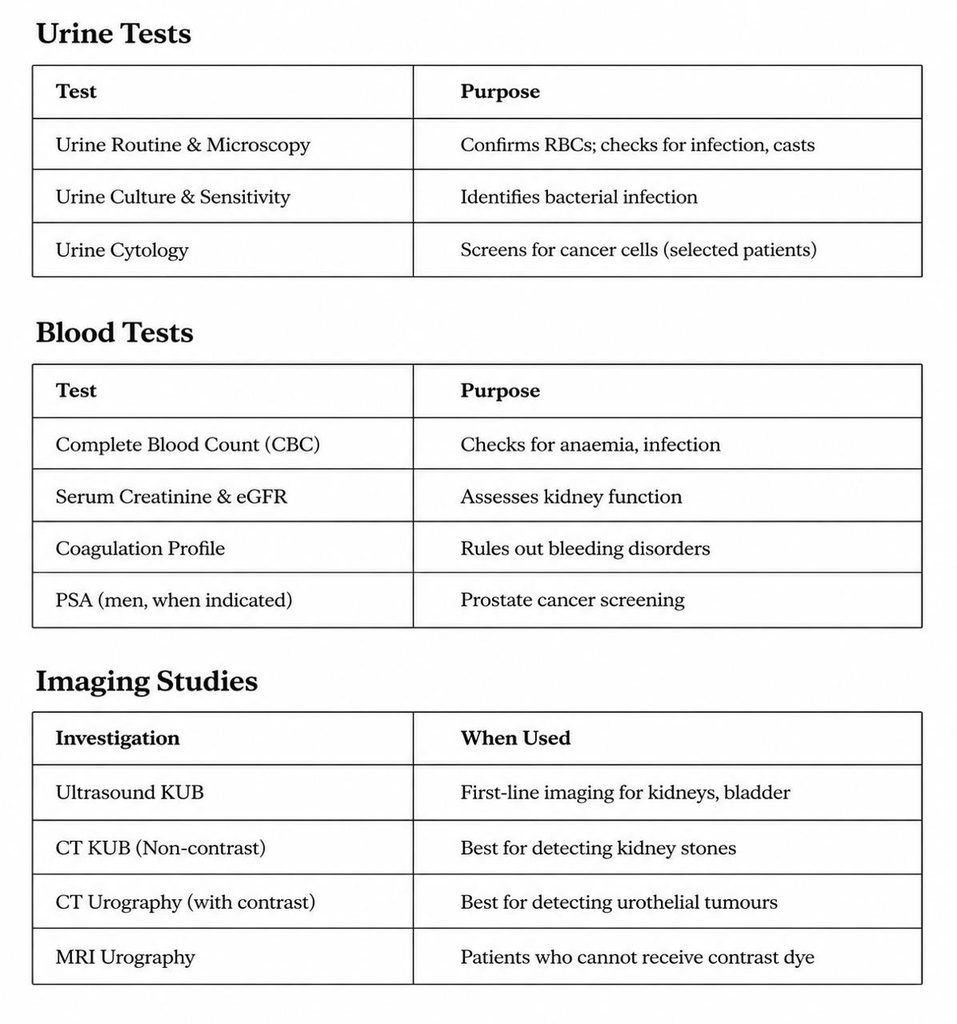
Cystoscopy
For adults — especially those over 35–40 years of age or with painless visible hematuria — cystoscopy is usually recommended.
A thin, flexible camera is passed through the urinary passage into the bladder under local anaesthesia. It can directly detect:
- Bladder tumours
- Bladder stones
- Prostate enlargement
- Sources of active bleeding
- Structural abnormalities
Cystoscopy is a standard, safe, and well-tolerated procedure performed at Urowala.
Is Blood in Urine Always Cancer?
No. The majority of patients with hematuria do not have cancer. Urinary infections, kidney stones, enlarged prostate, and exercise-related bleeding are far more common causes.
However, because bladder cancer and kidney cancer can present with painless bleeding as their *only early symptom*, every episode must be evaluated — even if it occurs just once and resolves on its own.
Early-stage urological cancers are highly treatable. Delayed evaluation reduces treatment options.
Treatment for Blood in Urine
Treatment is directed at the underlying cause identified after investigation.
Urinary Tract Infection
- Appropriate antibiotics based on urine culture
- Increased oral hydration
- Follow-up urine test to confirm clearance
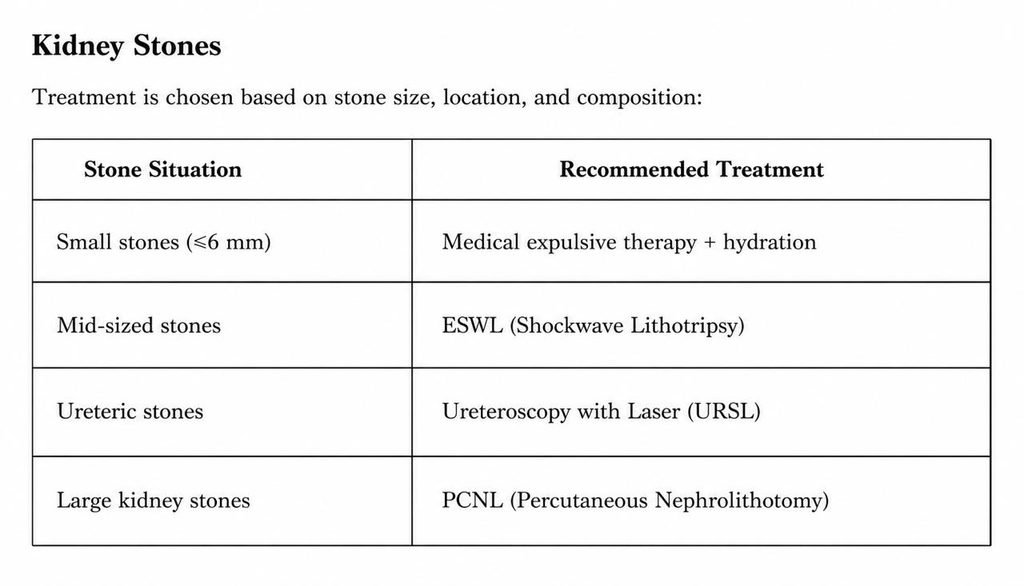
Kidney Stones
Treatment is chosen based on stone size, location, and composition:
Enlarged Prostate (BPH)
- Alpha-blockers and 5-alpha reductase inhibitors for most patients
- TURP (Transurethral Resection of Prostate) or laser prostatectomy when medications are insufficient
Bladder or Kidney Tumours
- Bladder tumour: TURBT (Transurethral Resection of Bladder Tumour) for diagnosis and initial treatment
- Kidney tumour: Robotic-assisted or laparoscopic partial or radical nephrectomy
- Additional therapy (immunotherapy, chemotherapy, radiation) depending on staging and histology
Kidney Diseases
Managed primarily by a nephrologist, in collaboration with urology when structural or surgical factors are involved.
Can Blood in Urine Resolve on Its Own?
Sometimes — particularly when caused by a mild UTI, exercise, or minor irritation. However, even if the bleeding stops, the underlying cause may still be present.
A single episode of visible blood in urine in an adult warrants evaluation regardless of whether it recurs.
How to Reduce Your Risk of Hematuria
Simple, evidence-based measures can lower your risk:
- Drink 2.5–3 litres of water daily (especially important in Rajasthan’s heat)
- Stop smoking — the single most important step to prevent bladder cancer
- Control diabetes and hypertension — both damage kidneys over time
- Treat urinary infections promptly — do not self-medicate
- Avoid delaying evaluation if you notice any blood in urine
- Limit excessive analgesic use (NSAIDs, when used chronically, can harm kidneys)
Frequently Asked Questions (FAQs)
What does blood in urine indicate?
Blood in urine (hematuria) can indicate a range of conditions — from a simple urinary tract infection or kidney stone to more serious causes like bladder cancer or kidney disease. The only way to determine the cause is through proper evaluation by a urologist.
Is blood in urine serious?
It should always be taken seriously. While many causes are benign and easily treatable, painless blood in urine in particular can be the earliest sign of bladder or kidney cancer — when treatment is most effective.
What is the most common cause of blood in urine?
Urinary tract infections, kidney stones, and enlarged prostate (in men) are the most common causes. However, the investigation is always necessary to rule out more serious conditions.
Can kidney stones cause blood in urine?
Yes. As a stone moves through the urinary tract, it can scratch the inner lining and cause visible or microscopic bleeding, often accompanied by severe flank pain.
Can blood in urine occur without pain?
Yes — and this is especially important. Painless hematuria is one of the classic presentations of bladder cancer and kidney cancer. Never assume it is harmless because there is no pain.
Which doctor should I consult for blood in urine?
A urologist — a specialist in kidney, bladder, prostate, and urinary tract conditions — is the appropriate doctor to evaluate hematuria. In Jaipur, you can consult Dr. Mohit Sharma at Urowala for a complete assessment.
Kya peshab mein khoon aana cancer ka sign hai? (क्या पेशाब में खून आना कैंसर का संकेत है?)
Zaroor nahin. Infection, kidney stone, ya prostate ke badhne se bhi hematuria hota hai. Lekin cancer ko rule out karne ke liye urologist se milna zaroori hai — khaaskar agar khoon bina dard ke aa raha ho. (Not necessarily. Infection, kidney stones, or an enlarged prostate are common causes. However, evaluation by a urologist is essential to rule out cancer — especially if the bleeding is painless.)
Jaipur mein peshab mein khoon ke liye kahan jaayein? (जयपुर में पेशाब में खून के लिए कहाँ जाएं?)
Jaipur mein Urowala Clinic mein Dr. Mohit Sharma se milein, jo MCh Urology (AIIMS Bhopal) se trained hain aur kidney stone, bladder tumour, aur prostate diseases mein expert hain. (In Jaipur, visit Urowala Clinic and consult Dr. Mohit Sharma, trained in MCh Urology from AIIMS Bhopal, with expertise in kidney stones, bladder tumours, and prostate diseases.)
When Should You See a Urologist in Jaipur?
Book a consultation if you experience any of the following:
- Visible blood in urine — even a single episode
- Blood clots in urine
- Recurrent urinary tract infections
- Burning urination with blood
- Persistent microscopic hematuria on urine tests
- Flank or kidney-region pain with blood in urine
- Weak urinary stream with intermittent bleeding
- Unexplained weight loss alongside blood in urine
Do not wait for symptoms to worsen. Early diagnosis is the cornerstone of effective treatment.
Expert Urological Care in Jaipur — Urowala
If you notice blood in your urine, do not ignore it. Whether the cause is a urinary infection, kidney stone, enlarged prostate, or a more serious condition, timely evaluation can make all the difference.
Dr. Mohit Sharma — MCh Urology, AIIMS Bhopal — is a specialist urologist and the founder of Urowala, a dedicated urology clinic in Jaipur offering comprehensive evaluation and modern treatment for kidney, bladder, prostate, and urinary tract diseases.
Patients from Jaipur (Mansarovar, Vaishali Nagar, Malviya Nagar, Jagatpura, Sanganer, Tonk Road, Civil Lines) and across Rajasthan (Ajmer, Tonk, Sikar, Alwar, Kota, Dausa, Sawai Madhopur, Bharatpur) trust Urowala for evidence-based, patient-focused urological care.
📞 Book your consultation at Urowala today — because your urological health cannot wait.
🌐 [urowala.com](https://urowala.com) | 📍 Jaipur, Rajasthan
*This article is written for patient education purposes. It does not constitute medical advice. Please consult Dr. Mohit Sharma or a qualified urologist for evaluation and treatment specific to your condition.*
About the Author
Dr. Mohit Sharma holds an MCh in Urology from AIIMS and is the founder of Urowala — Jaipur’s dedicated urology clinic. His clinical expertise spans kidney stone disease (URSL, PCNL, ESWL), prostate disorders (TURP, laser prostatectomy), bladder conditions, minimally invasive urological surgery, and men’s health. He is committed to providing evidence-based, patient-centred urological care to patients across Rajasthan.