
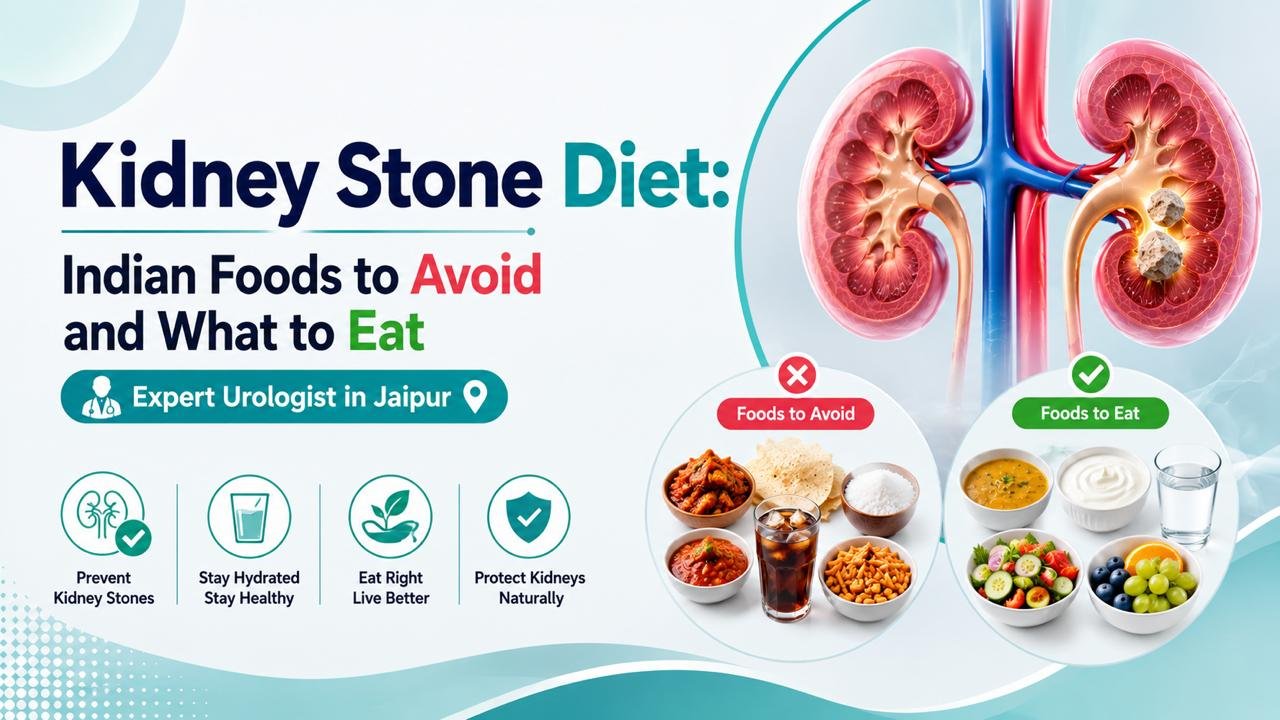

Introduction
Kidney stones are one of the most common urological problems in India. They can cause severe pain, blood in urine, urinary infections, and repeated hospital visits. The good news is that dietary changes can significantly reduce the risk of stone formation and recurrence.
Many patients ask, “Doctor, what should I eat and what should I avoid if I have kidney stones?”
The answer depends partly on the type of stone, but certain dietary principles apply to most patients. This guide explains kidney stone prevention using common Indian foods and eating habits.
What Causes Kidney Stones?
Kidney stones form when minerals and salts in urine become highly concentrated and crystallize.
Common types include:
- Calcium oxalate stones (most common)
- Uric acid stones
- Calcium phosphate stones
- Struvite stones
- Cystine stones
In India, calcium oxalate stones account for the majority of kidney stones.
Risk factors include:
- Low water intake
- Hot climate
- High salt diet
- Excessive animal protein
- Obesity
- Family history
- Recurrent urinary infections
The Most Important Rule: Drink More Water
No diet advice is more important than adequate hydration.
Aim for enough fluids to produce at least 2 to 2.5 liters of urine daily.
In Rajasthan and other hot regions, higher fluid intake is often necessary due to increased sweating.
Good fluid options include:
- Water
- Lemon water
- Coconut water (in moderation)
- Buttermilk
- Sugar-free homemade beverages
Signs of good hydration:
- Clear or light-yellow urine
- Frequent urination during the day
Indian Foods to Avoid if You Have Kidney Stones
1. Excess Salt (Namak)
A high-sodium diet increases calcium excretion in urine and promotes stone formation.
Limit:
- Pickles (achar)
- Papad
- Namkeen
- Chips
- Processed snacks
- Instant noodles
- Packaged soups
Try to avoid adding extra salt at the dining table.
2. Excess Tea Consumption
Tea contains oxalate.
Occasional tea is generally acceptable, but excessive consumption may increase stone risk in susceptible individuals.
Avoid:
- Multiple strong cups daily
- Concentrated tea preparations
3. Spinach (Palak)
Spinach is rich in oxalates and may increase the risk of calcium oxalate stones.
Patients with recurrent calcium oxalate stones should limit:
- Palak paneer
- Palak soup
- Palak juice
4. Beetroot
Beetroot contains significant oxalate levels and should be consumed in moderation by recurrent stone formers.
5. Nuts in Excess
Certain nuts contain oxalates.
Limit excessive intake of:
- Almonds
- Cashews
- Peanuts
Moderate consumption is usually acceptable.
6. Chocolate
Chocolate and cocoa products contain oxalates and should be consumed occasionally rather than regularly.
7. Packaged and Fast Foods
Fast foods often contain:
- Excess salt
- Preservatives
- High calorie content
Examples:
- Pizza
- Burgers
- Processed meats
- Fried snacks
8. Sugary Soft Drinks
Sugar-sweetened beverages may increase stone risk.
Avoid frequent consumption of:
- Cola drinks
- Soft drinks
- Energy drinks
Water remains the best beverage.
Foods You Can Eat for Kidney Stone Prevention
Many patients unnecessarily avoid calcium-rich foods. This is often a mistake.
1. Milk and Dairy Products
Normal dietary calcium actually helps reduce stone formation by binding oxalate in the intestine.
Good options include:
- Milk
- Curd
- Buttermilk
- Paneer (in moderation)
Do not stop dairy products unless specifically advised by your doctor.
2. Citrus Fruits
Citrate helps prevent stone formation.
Recommended fruits include:
- Lemon
- Mosambi
- Orange
- Sweet lime
Daily lemon water can be beneficial for many stone-forming patients.
3. Fresh Fruits
Good choices include:
- Apples
- Pears
- Bananas
- Papaya
- Watermelon
- Muskmelon
These also help improve hydration.
4. Vegetables
Most vegetables are healthy and safe.
Examples include:
- Bottle gourd (Lauki)
- Ridge gourd (Turai)
- Pumpkin
- Cabbage
- Cauliflower
- Cucumber
5. Whole Grains
Choose:
- Whole wheat roti
- Oats
- Dalia
- Brown rice
These support overall metabolic health.
Is Lemon Water Good for Kidney Stones?
Yes.
Lemon contains citrate, which can help prevent stone formation.
Many stone-forming patients benefit from:
- Lemon water
- Lime water
- Citrus fruits
Avoid excessive sugar while preparing these drinks.
Is Coconut Water Good for Kidney Stones?
Coconut water can help maintain hydration and may be included in moderation.
However, it should not replace regular water intake.
Does Beer Dissolve Kidney Stones?
No.
This is a common myth.
Alcohol does not dissolve kidney stones and may contribute to dehydration, which can worsen stone risk.
Water remains the most effective beverage for stone prevention.
Diet for Uric Acid Stones
Patients with uric acid stones should reduce foods rich in purines.
Limit:
- Red meat
- Organ meat (liver, kidney)
- Excess seafood
- Alcohol
Increase:
- Water intake
- Fruits and vegetables
Sample Indian Kidney Stone Diet Plan
Early Morning
- 1–2 glasses of water
- Lemon water without excess sugar
Breakfast
- Vegetable poha
- Oats
- Idli
- Dalia
Mid-Morning
- Coconut water or fruit
Lunch
- Roti
- Dal
- Vegetable
- Curd
- Salad
Evening
- Fruit
- Buttermilk
Dinner
- Roti
- Vegetable
- Dal
- Salad
Before Bed
- Glass of water
Common Mistakes Made by Kidney Stone Patients
Many patients:
❌ Stop drinking milk completely
❌ Drink very little water in winter
❌ Consume excessive salt
❌ Depend on home remedies alone
❌ Ignore follow-up scans
❌ Delay treatment for recurrent stones
These mistakes can increase the risk of stone recurrence.
How to Prevent Kidney Stones from Coming Back
Follow these simple steps:
✔ Drink 2.5–3 liters of fluids daily
✔ Reduce salt intake
✔ Maintain healthy body weight
✔ Consume normal dietary calcium
✔ Limit excessive oxalate-rich foods
✔ Treat urinary infections promptly
✔ Follow up regularly with your urologist
Patients who have already had one kidney stone are at a higher risk of developing another, making prevention especially important.
Frequently Asked Questions (FAQs)
Which food causes kidney stones the most?
No single food causes all kidney stones. Common contributors include excessive salt, inadequate water intake, and large amounts of oxalate-rich foods in susceptible individuals.
Can I drink milk if I have kidney stones?
Yes. Normal dietary calcium from milk and dairy products is generally recommended and may help prevent calcium oxalate stones.
Is banana good for kidney stones?
Yes. Bananas are generally considered a healthy fruit choice for most kidney stone patients.
Is lemon water good for kidney stones?
Yes. Lemon contains citrate, which may help reduce stone formation.
Can kidney stones be prevented by diet alone?
Diet is very important, but some patients also require metabolic evaluation, medication, or treatment of underlying conditions.
When Should You See a Urologist?
Consult a urologist if you have:
- Severe flank pain
- Blood in urine
- Recurrent kidney stones
- Urinary infection with stones
- Family history of kidney stones
- Stones detected on ultrasound or CT scan
Early treatment can prevent complications and preserve kidney function.
Expert Kidney Stone Treatment in Jaipur
If you have kidney stones or recurrent stone formation, proper dietary guidance and medical evaluation are essential. Not all stones are the same, and prevention strategies should be individualized.
At Urowala, we provide comprehensive kidney stone care including dietary counseling, metabolic evaluation, stone analysis, ESWL, URS, RIRS, Mini-PCNL, and PCNL procedures. Patients from Jaipur, Mansarovar, Vaishali Nagar, Malviya Nagar, Jagatpura, Sanganer, Ajmer, Tonk, Sikar, Alwar, Kota, and across Rajasthan trust us for evidence-based kidney stone treatment.
Book your consultation today and learn how to prevent kidney stones from returning.