

Introduction
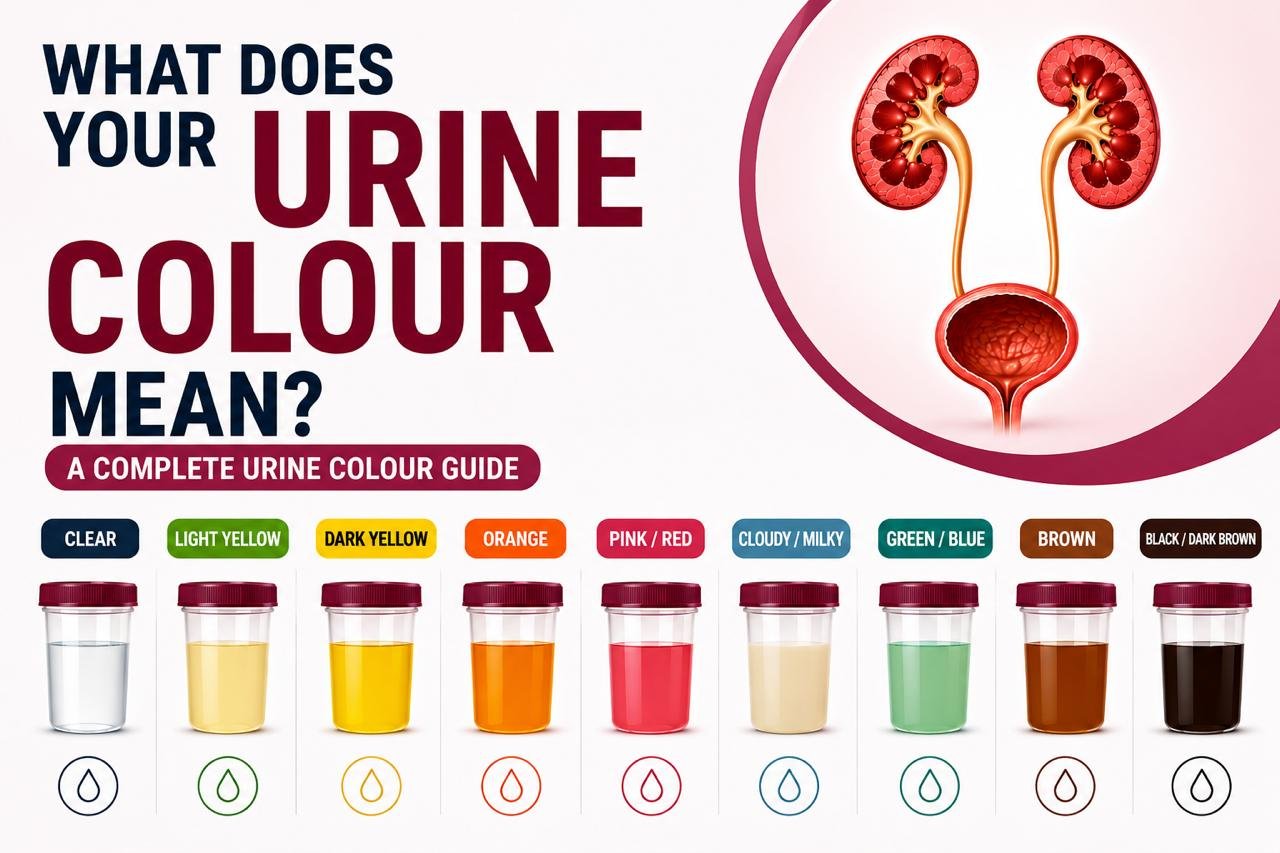
Most people rarely pay attention to the colour of their urine. However, urine colour can provide important clues about your hydration status, diet, medications, and — occasionally — serious underlying medical conditions.
While occasional colour changes are usually harmless, some colours may point to infections, kidney stones, liver disease, or even urinary tract cancers. This guide breaks down what different urine colours may mean and when it’s time to consult a urologist.
1. Clear or Colourless Urine
Common Causes
- Drinking large amounts of water
- Overhydration
- Certain medications
Should You Worry?
Usually no. However, persistently colourless urine despite normal fluid intake may occasionally warrant a check-up.
2. Light Yellow Urine
This is generally considered the ideal urine colour. It indicates:
- Good hydration
- Normal kidney function
3. Dark Yellow or Amber Urine
Common Causes
- Dehydration
- Excessive sweating (common in Jaipur’s hot summer months)
- Fever
- Reduced water intake
What To Do
Increase fluid intake and monitor for colour changes over the next day.
4. Orange Urine
Possible Causes
- Dehydration
- Vitamin supplements
- Phenazopyridine (a urinary pain medication)
- Certain antibiotics
When to See a Doctor
If orange urine persists despite good hydration and is not explained by medication or supplements.
5. Red or Pink Urine
Many patients become alarmed when they notice red urine — and rightly so, as this deserves prompt attention.
Possible Causes
Blood in Urine (Hematuria) May occur due to:
- Kidney stones
- Urinary infection
- Enlarged prostate
- Kidney disease
- Bladder cancer
- Kidney cancer
Food Causes
- Beetroot
- Blackberries
Medications
- Rifampicin
- Certain laxatives
When to Seek Immediate Medical Care
Visible blood in urine should always be evaluated by a urologist. Even painless blood in urine — with no pain or burning at all — can indicate serious underlying disease and should never be dismissed simply because it doesn’t hurt.
6. Cloudy or Milky Urine
Possible Causes
- Urinary tract infection (UTI)
- Pus cells in urine
- Kidney stones
- Chyluria
- Phosphate crystals
Associated Symptoms
- Burning urination
- Frequent urination
- Fever
- Foul smell
7. Green or Blue Urine
Although uncommon, green or blue urine can occur due to:
- Methylene blue
- Certain medications
- Food colouring
- Rare metabolic disorders
Most cases are medication-related and resolve once the medication is stopped.
8. Brown or Tea-Coloured Urine
Possible Causes
- Severe dehydration
- Liver disease
- Bilirubin in urine
- Certain medications
- Muscle injury
When to Get Evaluated
Persistent brown urine — especially if it doesn’t improve with hydration — requires medical assessment to rule out liver or muscle-related causes.
9. Black or Dark Brown Urine
This is uncommon but can occur due to:
- Severe bleeding
- Certain rare metabolic disorders
- Melanin-related conditions
- Some medications
Medical evaluation is recommended for any persistently black or very dark urine.
Common Medications That Change Urine Colour
Some medications can alter urine colour without indicating any underlying disease. Examples include:
| Medication | Urine Colour Change |
|---|---|
| Rifampicin | Red-orange |
| Nitrofurantoin | Brown |
| Metronidazole | Brown |
| Methylene blue | Blue-green |
| Vitamin B supplements | Bright yellow |
If you are taking any of these medications and notice a colour change, this is usually expected and not a cause for concern.
Urine Colour Quick Guide
| Colour | Common Cause |
|---|---|
| Clear | Overhydration |
| Light yellow | Normal |
| Dark yellow | Dehydration |
| Orange | Dehydration, medicines |
| Red/Pink | Blood, beetroot, medicines |
| Cloudy/Milky | Infection, crystals |
| Green/Blue | Medicines, dyes |
| Brown | Liver disease, dehydration |
| Black | Rare disorders, bleeding |
When Should You See a Urologist?
Consult a urologist if you notice:
- Blood in urine
- Persistent cloudy urine
- Burning urination
- Recurrent urine infections
- Urine colour changes lasting several days
- Flank pain or symptoms suggestive of kidney stones
Urine Colour Concerns: Getting Evaluated in Jaipur
If you notice a concerning urine colour change, a simple urine routine and microscopy test is usually the first step and is widely available at diagnostic labs across Jaipur. Further evaluation may include ultrasound, urine culture, or cystoscopy depending on the findings. A few points relevant to local patients:
- Government facilities such as SMS Hospital, Jaipur and RUHS Hospital offer urology consultation, urine testing, and imaging services.
- Patients covered under Ayushman Bharat should check eligibility for diagnostic work-up and further treatment at their empanelled hospital.
- Affordable generic medications for UTIs and related conditions are available through Jan Aushadhi Kendra outlets across the city.
Visible blood in urine, in particular, should never be self-managed or ignored — even if it occurs only once and resolves on its own. Prompt evaluation by a urologist is the safest course of action.
Frequently Asked Questions (FAQs)
What does dark yellow urine mean?
Dark yellow urine most commonly indicates mild dehydration and usually improves with increased fluid intake, though persistent dark urine despite good hydration should be evaluated.
गहरे पीले रंग के पेशाब का क्या मतलब है? गहरे पीले रंग का पेशाब सबसे अधिक हल्के डिहाइड्रेशन का संकेत देता है और आमतौर पर पानी अधिक पीने से ठीक हो जाता है, लेकिन अच्छी हाइड्रेशन के बावजूद लगातार गहरा पेशाब होने पर जांच करानी चाहिए।
Why is my urine red?
Red urine may be caused by actual blood in the urine (from kidney stones, infection, enlarged prostate, or in rare cases cancer), or by harmless causes such as beetroot or certain medications. Any red or pink urine should be evaluated to rule out serious causes.
मेरा पेशाब लाल क्यों है? लाल पेशाब का कारण वास्तविक रक्तस्राव (पथरी, इन्फेक्शन, बढ़ी हुई प्रोस्टेट, या दुर्लभ मामलों में कैंसर) हो सकता है, या फिर चुकंदर या कुछ दवाओं जैसे हानिरहित कारण भी हो सकते हैं। किसी भी लाल या गुलाबी पेशाब की जांच करानी चाहिए ताकि गंभीर कारणों को दूर किया जा सके।
Is cloudy urine dangerous?
Cloudy urine is often caused by a urinary tract infection or crystals in the urine. While not always an emergency, it should be evaluated, especially if accompanied by burning, fever, or foul smell.
क्या धुंधला (cloudy) पेशाब खतरनाक है? धुंधला पेशाब अक्सर यूरिनरी ट्रैक्ट इन्फेक्शन या पेशाब में क्रिस्टल के कारण होता है। यह हमेशा इमरजेंसी नहीं होता, लेकिन खासकर जलन, बुखार, या दुर्गंध के साथ होने पर इसकी जांच करानी चाहिए।
What causes brown urine?
Brown urine can result from severe dehydration, liver disease, bilirubin in the urine, certain medications, or muscle injury. Persistent brown urine warrants medical evaluation.
भूरे रंग के पेशाब का कारण क्या है? भूरे रंग का पेशाब गंभीर डिहाइड्रेशन, लिवर की बीमारी, पेशाब में बिलीरुबिन, कुछ दवाओं, या मांसपेशियों की चोट के कारण हो सकता है। लगातार भूरा पेशाब होने पर चिकित्सकीय जांच आवश्यक है।
Which urine colours require urgent medical attention?
Red or pink urine (blood), persistently cloudy urine, and black or very dark brown urine all warrant prompt evaluation by a urologist.
किन पेशाब के रंगों के लिए तुरंत चिकित्सकीय ध्यान देना चाहिए? लाल या गुलाबी पेशाब (रक्त), लगातार धुंधला पेशाब, और काला या बहुत गहरा भूरा पेशाब — इन सभी के लिए यूरोलॉजिस्ट से तुरंत जांच करानी चाहिए।
Can dehydration change urine colour?
Yes. Dehydration is one of the most common causes of dark yellow, amber, or orange urine, and usually resolves once fluid intake is increased.
क्या डिहाइड्रेशन से पेशाब का रंग बदल सकता है? हाँ। डिहाइड्रेशन गहरे पीले, एम्बर, या नारंगी रंग के पेशाब का सबसे आम कारण है, और आमतौर पर पानी अधिक पीने से यह ठीक हो जाता है।
Key Takeaway
Urine colour can provide valuable information about your health. While many colour changes are harmless and temporary, persistent changes — especially red, cloudy, brown, or black urine — should not be ignored. Early evaluation can help identify infections, kidney stones, prostate problems, and other urological conditions before complications develop.
This article is written for general patient education and does not replace an in-person consultation. For any concerning urine colour change, especially visible blood in urine, please consult a qualified urologist promptly.
About the Author: Dr. Mohit Sharma is an MCh Urology specialist trained at AIIMS, with clinical expertise in kidney stone disease, urinary tract disorders, and men’s health. He is the founder of UROWALA, a urology patient education and consultation platform based in Jaipur, Rajasthan.