

Introduction
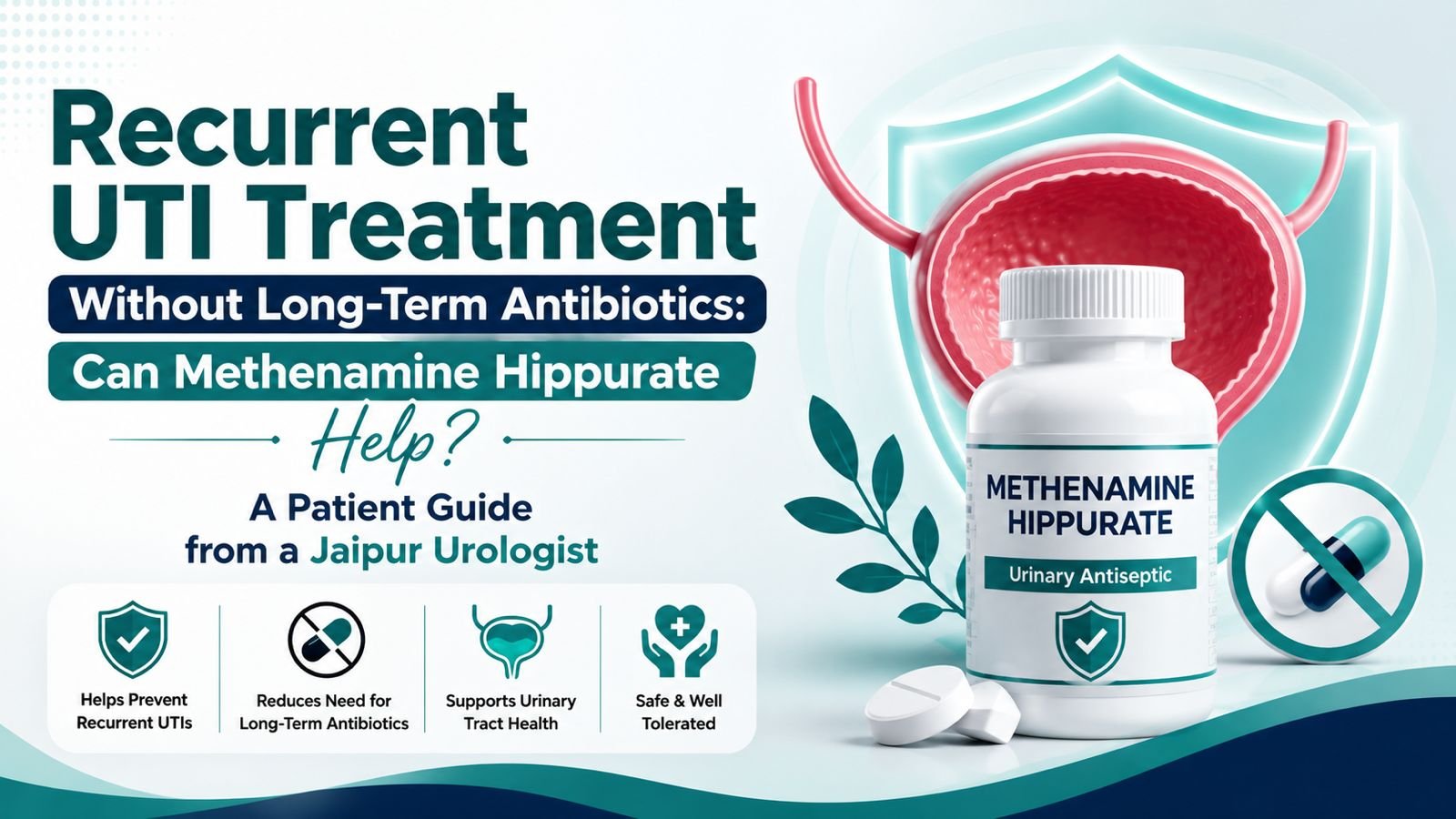
If you are someone who keeps getting urinary tract infections (UTIs) every few months, you may be tired of repeated antibiotic courses, urine tests, and recurring symptoms. Fortunately, not every recurrent UTI patient requires long-term antibiotics. One increasingly used option is Methenamine Hippurate, a non-antibiotic medication that helps prevent recurrent urinary infections.
This article explains what patients should know about Methenamine Hippurate — how it works, who it may suit, its benefits, and its precautions. This medication should only be started, dosed, and monitored by a qualified urologist, and this article does not include dosing information for that reason.
What Is Recurrent UTI?
A recurrent UTI is generally defined as two or more UTIs within 6 months, or three or more UTIs within 12 months. Common symptoms include:
- Burning during urination
- Frequent urination
- Urgency to pass urine
- Lower abdominal discomfort
- Cloudy or bad-smelling urine
- Blood in urine
- Fever in severe infections
Women are more commonly affected, but recurrent UTIs can also occur in men, especially those with prostate problems, kidney stones, urinary obstruction, or catheter use.
Why Repeated Antibiotics Are a Problem
Many patients receive antibiotics every few months. While antibiotics are necessary for treating active infections, repeated use can lead to antibiotic resistance, gut microbiome disturbances, fungal infections, increased healthcare costs, and fewer effective treatment options over time. This is why urologists increasingly look at non-antibiotic preventive strategies for carefully selected patients.
What Is Methenamine Hippurate?
Methenamine Hippurate is a urinary antiseptic used primarily for:
- Prevention of recurrent UTIs
- Maintenance therapy after antibiotic treatment
- Suppression of infection in catheterized patients
- Prevention of catheter blockage
- Prevention of infection during urinary instrumentation
- Selected cases of asymptomatic bacteriuria
Unlike antibiotics, it does not directly kill bacteria throughout the body.
How Does Methenamine Hippurate Work?
This is the most important concept for patients to understand. After absorption from the intestine, Methenamine reaches the urine through the kidneys. In acidic urine, it breaks down into formaldehyde, which acts as a urinary antiseptic and suppresses bacterial growth inside the urinary tract. Because its effect comes from formaldehyde formation rather than a traditional antibiotic mechanism, bacterial resistance is uncommon — one of the main reasons this medication is gaining attention for recurrent UTI prevention.
Why Urine Acidity Matters
Methenamine only works effectively when urine is acidic. If urine becomes alkaline, the drug cannot generate enough formaldehyde and its effectiveness decreases significantly. This is part of why some patients respond better than others, and why a urologist may check urine pH as part of your evaluation.
Which Bacteria Does It Work Against?
Methenamine Hippurate is active against many common urinary pathogens, including E. coli and several other organisms responsible for the majority of uncomplicated UTIs.
Which Bacteria May Not Respond Well?
It may be less effective against Proteus species and Pseudomonas aeruginosa, since these organisms break down urea and produce ammonia, which raises urine pH and reduces formaldehyde production. This is why a urine culture report is important before starting long-term prevention with this medication.
Major Advantages of Methenamine Hippurate
1. Non-antibiotic treatment — does not belong to the traditional antibiotic group
2. Reduces antibiotic exposure — can help decrease repeated antibiotic courses
3. Low resistance rates — development of bacterial resistance is uncommon
4. Suitable for long-term prevention — can be used for extended periods under urologist supervision
5. Useful in catheter patients — may reduce urinary infection and catheter blockage
6. Relatively rapid onset — begins acting within a short time after administration
Who Should Avoid Methenamine Hippurate?
This medication is generally unsuitable for patients with severe kidney failure, severe liver disease, metabolic acidosis, severe dehydration, kidney parenchymal infections, uric acid gout, or a known formalin allergy. Patients with mild-to-moderate kidney impairment may still be able to use it, but only under specialist supervision. Only your urologist can determine whether this medication is appropriate and safe for you.
Important Drug Interactions
Some commonly used medications can reduce the effectiveness of Methenamine Hippurate by making urine alkaline, including potassium citrate, urinary alkalinizers, antacids, and acetazolamide. It should generally not be combined with sulfonamide antibiotics due to the risk of crystal formation in urine. Always tell your urologist about every medication and supplement you are taking before starting this drug.
Can It Be Used During Pregnancy or Breastfeeding?
Available data from pregnancies exposed to this medication have not shown major fetal toxicity, and it may be considered during pregnancy when clinically necessary and prescribed by a physician. Small amounts may enter breast milk, but current evidence suggests this is unlikely to harm a breastfed infant at recommended doses. Even so, pregnant and breastfeeding women should only take this medication under direct medical supervision.
Common Side Effects
Most patients tolerate this medication well. Possible side effects include:
Gastrointestinal: nausea, vomiting, gastric irritation, abdominal pain, diarrhea
Urinary: bladder irritation, burning urination, dysuria, blood in urine (hematuria)
Skin: rash, itching
At very high doses, chemical cystitis may occur. Report any unusual or persistent symptoms to your urologist promptly.
Practical Tips for Patients with Recurrent UTI
Whether or not you are on preventive medication, these habits can help reduce recurrence:
- Drink adequate water
- Avoid holding urine for long periods
- Urinate after intercourse
- Manage constipation
- Keep diabetes well controlled
- Follow urine culture recommendations
- Complete any prescribed treatment fully
- Attend regular urology follow-ups
When Should You See a Urologist in Jaipur?
Consult a urologist if UTIs keep returning, if you develop fever with a UTI, if there is blood in urine, if symptoms persist despite treatment, if you have kidney stones or urinary retention, or if you find yourself needing repeated antibiotics. A detailed evaluation can identify the root cause and help prevent future infections. Patients across Jaipur — including Mansarovar, Vaishali Nagar, Malviya Nagar, C-Scheme, and Jagatpura — as well as from other parts of Rajasthan, can consult UROWALA for a personalized recurrent UTI prevention plan.
Methenamine Hippurate is marketed under different brand names in different countries. Some commonly known brands include:
Huena
Hippurase
MethaClear
Frequently Asked Questions (FAQs)
Q1. Is Methenamine Hippurate an antibiotic?
No. It works differently from antibiotics by generating formaldehyde in acidic urine, which is why bacterial resistance to it is uncommon.
प्रश्न 1. क्या मेथेनामाइन हिप्यूरेट एक एंटीबायोटिक है?
नहीं। यह एंटीबायोटिक्स से अलग तरीके से काम करता है और एसिडिक यूरिन में फॉर्मेल्डिहाइड बनाकर बैक्टीरिया को रोकता है, इसलिए इसके प्रति प्रतिरोध बनना दुर्लभ है।
Q2. Can I take Methenamine Hippurate without a prescription?
No. This medication should never be started without a urologist’s evaluation, as suitability depends on your kidney function, urine pH, culture results, and other medications you may be taking.
प्रश्न 2. क्या बिना डॉक्टर की सलाह के मेथेनामाइन हिप्यूरेट ले सकते हैं?
नहीं। इसे कभी भी यूरोलॉजिस्ट की जांच के बिना शुरू नहीं करना चाहिए, क्योंकि इसकी उपयुक्तता किडनी फंक्शन, यूरिन pH, कल्चर रिपोर्ट और अन्य दवाओं पर निर्भर करती है।
Q3. Does it work for all types of UTI-causing bacteria?
No. It works well against common organisms like E. coli but may be less effective against Proteus and Pseudomonas species, which is why a urine culture is important before starting it.
प्रश्न 3. क्या यह सभी प्रकार के UTI बैक्टीरिया पर असरदार है?
नहीं। यह E. coli जैसे सामान्य बैक्टीरिया पर अच्छा काम करता है, लेकिन प्रोटियस और स्यूडोमोनास जैसे बैक्टीरिया पर कम असरदार हो सकता है, इसलिए शुरू करने से पहले यूरिन कल्चर जरूरी है।
Q4. Can it be used long-term?
It can be used for extended periods in carefully selected patients, but only under ongoing urologist supervision, with periodic review of kidney function and response to treatment.
प्रश्न 4. क्या इसे लंबे समय तक लिया जा सकता है?
चुनिंदा मरीजों में इसे लंबे समय तक लिया जा सकता है, लेकिन केवल यूरोलॉजिस्ट की निगरानी में, समय-समय पर किडनी फंक्शन और असर की जांच के साथ।
Q5. What should I do if I keep getting UTIs despite treatment?
You should see a urologist for a detailed evaluation, which may include urine culture, imaging, and assessment for underlying causes such as kidney stones or incomplete bladder emptying.
प्रश्न 5. अगर इलाज के बावजूद बार-बार UTI हो रहा है तो क्या करें?
यूरोलॉजिस्ट से विस्तृत जांच करवानी चाहिए, जिसमें यूरिन कल्चर, इमेजिंग और किडनी स्टोन या मूत्राशय ठीक से खाली न होने जैसे कारणों की जांच शामिल हो सकती है।
Final Thoughts
Methenamine Hippurate is one of the notable non-antibiotic options available today for recurrent UTI prevention. It works by generating formaldehyde in acidic urine, helping suppress bacterial growth without meaningfully contributing to antibiotic resistance. It is not suitable for every patient, and its effectiveness depends on factors like urine pH, kidney function, and the specific bacteria involved — all of which need to be assessed by a urologist before starting treatment.
—
About the Author
This article is medically reviewed by Dr. Mohit Sharma, MCh Urology (AIIMS), founder of UROWALA, Jaipur. Dr. Sharma specializes in recurrent UTI management, kidney stone disease, and men’s and women’s urological health.
Important Medical Disclaimer
This article is intended for general educational purposes only and does not constitute medical advice. Methenamine Hippurate is a prescription medication and must not be taken without evaluation and prescription by a qualified urologist. Dosing, suitability, and duration of treatment depend on individual factors including kidney function, urine pH, culture results, and other medications, and can only be determined by your treating doctor. Please consult Dr. Mohit Sharma or another qualified healthcare provider before starting or stopping any treatment for recurrent UTI.