

Introduction
Many people believe urinary tract infections (UTIs) only affect women. While UTIs are indeed more common in females, men can and do develop UTIs — particularly after the age of 50, or when an underlying urinary problem is present.
In men, a UTI is usually considered complicated. This means there is almost always an underlying cause — such as an enlarged prostate, kidney stones, urinary obstruction, or prostate infection — that needs to be identified and treated alongside the infection itself. Ignoring symptoms can allow the infection to spread to the kidneys, prostate, or bloodstream.
If you experience burning urination, frequent urination, fever, or blood in urine, consult a urologist in Jaipur promptly for proper evaluation and treatment.
What Is a Urinary Tract Infection (UTI)?
A urinary tract infection occurs when bacteria enter and multiply within any part of the urinary system, which includes:
- Kidneys
- Ureters
- Bladder
- Prostate (in men)
- Urethra
Most UTIs are caused by Escherichia coli (E. coli) — bacteria that normally live in the intestine but can migrate into the urinary tract and cause infection.
Common Symptoms of UTI in Men
Symptoms vary depending on which part of the urinary tract is affected. Recognising these early helps prevent serious complications.
1. Burning or Pain While Urinating
The most common presenting symptom of a UTI. You may notice:
- A burning sensation during urination
- Pain at the start or end of passing urine
- Discomfort or stinging along the urinary passage
2. Frequent Urination
A persistent need to urinate repeatedly throughout the day — even when the bladder is not full. Many men describe it as needing to visit the toilet every few minutes with little relief.
3. Sudden, Urgent Need to Urinate
An intense and difficult-to-control urge to urinate that comes on without warning. This is called urinary urgency and often accompanies bladder infections.
4. Passing Only Small Amounts of Urine
Despite frequent trips to the bathroom, only a small volume of urine is produced each time. This combination of frequency and low output is a hallmark of bladder irritation.
5. Blood in Urine (Hematuria)
Urine may appear pink, red, or dark brown. Blood in urine should always be evaluated by a urologist, as it may also indicate kidney stones, prostate disease, or bladder cancer — not just infection.
6. Cloudy or Foul-Smelling Urine
Urine may look turbid or cloudy due to pus cells (pyuria), and may have a strong, unpleasant odour due to bacterial overgrowth.
7. Lower Abdominal or Pelvic Pain
Aching or pressure may develop in the:
- Lower abdomen
- Pelvic region
- Area above the pubic bone
8. Fever and Chills
A high-grade fever with chills is a warning sign. It suggests the infection has spread beyond the bladder — to the prostate (prostatitis) or kidneys (pyelonephritis). This requires immediate medical attention.
9. Flank Pain or Back Pain
Pain in the side of the abdomen, back, or kidney region — particularly when combined with fever — strongly suggests a kidney infection and should not be ignored.
10. Difficulty or Weak Stream While Urinating
Men with an underlying enlarged prostate may experience:
- Weak or interrupted urine flow
- Straining to initiate urination
- Feeling of incomplete bladder emptying
These symptoms indicate urinary obstruction, which increases the risk of recurrent UTIs.
Why Do Men Get UTIs?
The male urethra is significantly longer than the female urethra, which is why UTIs are less common in men. When they do occur, doctors always look for an underlying urological condition driving the infection.
Enlarged Prostate (BPH — Benign Prostatic Hyperplasia)
An enlarged prostate compresses the urethra and prevents complete bladder emptying. Residual urine becomes a breeding ground for bacteria, leading to recurrent infections. BPH is the most common underlying cause of UTI in men over 50 in Jaipur and across Rajasthan.
Kidney Stones
Stones obstructing urine flow create stagnant urine upstream, which bacteria can colonise easily. Patients with untreated kidney stones frequently develop recurrent UTIs.
Prostatitis (Prostate Infection)
Bacterial infection of the prostate gland causes:
- Fever and chills
- Perineal or pelvic pain
- Burning urination
- Painful ejaculation
- Recurrent UTIs
> Important clinical note: Not all antibiotics reach adequate concentrations within prostate tissue. Nitrofurantoin, for example, is effective for uncomplicated bladder infections but is not suitable for bacterial prostatitis due to poor prostatic penetration. Fluoroquinolones (e.g., ciprofloxacin) or trimethoprim are generally preferred for prostate infections — but only after a urine culture. This is why persistent symptoms in men must be evaluated by a urologist rather than managed with repeated short courses of antibiotics from a general practitioner.
Diabetes
Elevated blood glucose weakens immune defences, reduces bladder muscle function, and promotes bacterial growth in the urinary tract. Men with poorly controlled diabetes in Jaipur are at significantly higher risk of complicated UTIs.
Urinary Catheter
Long-term catheter use introduces bacteria directly into the bladder and is a leading cause of hospital-acquired UTIs.
Poor Bladder Emptying (Urinary Retention)
Neurological conditions, spinal disorders, or structural obstruction can impair complete bladder emptying. Residual urine stagnates and becomes infected.
Sexually Transmitted Infections (STIs)
Gonorrhoea, chlamydia, and other STIs can produce symptoms closely resembling a UTI — including burning urination and urethral discharge. The treatment is entirely different, which is why proper testing at a urology clinic is essential before starting any antibiotic.
Who Is at Higher Risk of UTI in Men?
You are more likely to develop a urinary tract infection if you:
- Are over 50 years of age
- Have an enlarged prostate (BPH)
- Have kidney or bladder stones
- Have diabetes (Type 1 or Type 2)
- Use a urinary catheter
- Have had previous urinary tract surgery
- Have a history of recurrent UTIs
- Have structural abnormalities of the urinary tract
- Are immunocompromised
How Is a UTI Diagnosed in Jaipur?
A urologist will take a detailed history and clinical examination, followed by targeted investigations to confirm the infection and identify any underlying cause.
Urine Tests
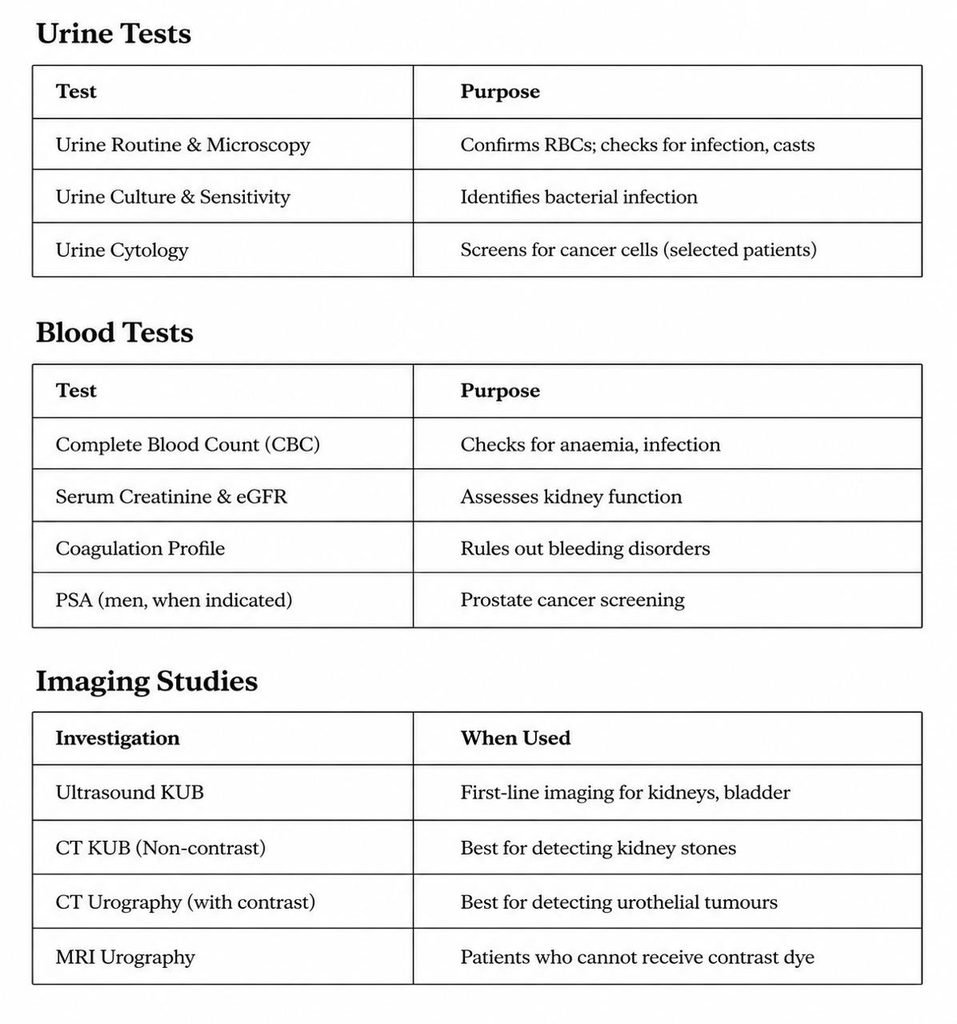
Additional Investigations for Recurrent UTI
For men with repeated infections, further tests may include:
- Uroflowmetry — measures urine flow rate and pattern
- Post-void Residual Urine (PVR) — ultrasound measurement of urine left after voiding
- Cystoscopy — direct camera examination of the bladder and urethra (selected cases)
- PSA (Prostate Specific Antigen) — when prostate cancer needs to be excluded
These tests help identify the root cause driving recurrent infections.
Treatment of UTI in Men
Treatment is tailored to the severity of infection, the bacteria identified on culture, and the underlying cause.
Antibiotic Therapy

Always complete the full course of antibiotics — stopping early when symptoms improve leads to incomplete eradication and antibiotic resistance.
Avoid self-medication. Over-the-counter antibiotics without a urine culture are one of the leading causes of treatment failure and drug-resistant UTIs in Jaipur.
Supportive Measures
- Drink 2.5–3 litres of water daily to flush the urinary tract
- Pain relief (analgesics, antispasmodics) for symptom control
- Alpha-blockers if prostate enlargement is contributing to incomplete emptying
Treatment of Underlying Cause
Treating the infection alone without addressing the root cause leads to recurrence:
| Underlying Cause | Treatment Approach |
|—|—|
| Enlarged Prostate (BPH) | Medications; TURP or laser prostatectomy if severe |
| Kidney Stones | ESWL, URSL, or PCNL depending on stone size/location |
| Urinary Retention | Catheterisation; treat obstruction |
| Diabetes | Optimise glycaemic control |
Can a UTI in Men Resolve Without Antibiotics?
In men — almost never.
Because male UTIs are considered complicated infections with an identifiable underlying cause, delaying treatment risks:
- Spread to the kidneys (pyelonephritis)
- Spread to the prostate (bacterial prostatitis)
- Bloodstream infection (urosepsis) — a medical emergency
- Permanent kidney damage
Do not wait and watch. Seek urological evaluation promptly.
—
How to Prevent UTIs in Men
Practical, evidence-based steps to lower your risk:
- Drink adequate water daily — aim for 2.5–3 litres, especially in Rajasthan’s heat
- Do not hold urine — empty your bladder every 3–4 hours
- Maintain good genital hygiene
- Control blood sugar — get HbA1c checked regularly if you have diabetes
- Empty your bladder fully — if you feel incomplete emptying, see a urologist
- Treat prostate or kidney stone problems promptly — don’t wait for a UTI to develop
- Avoid unnecessary urinary catheters — insist on proper indication and sterile technique if one is required
- Do not self-medicate with antibiotics — this promotes resistance and masks the true cause
When Should You See a Urologist in Jaipur Immediately?
Seek urgent urological consultation if you experience:
- Fever with burning urination
- Blood in urine
- Severe back, flank, or abdominal pain
- Inability to pass urine
- Symptoms not improving within 48 hours of antibiotic treatment
- Persistent burning after completing a full antibiotic course
- A second episode of UTI within weeks of completing treatment
These symptoms suggest either treatment failure, antibiotic resistance, or an underlying urological condition requiring specialist management.
Frequently Asked Questions (FAQs)
Can men get urinary tract infections?
Yes. Although UTIs are less common in men than women, they do occur — particularly in men over 50, those with an enlarged prostate, kidney stones, diabetes, or urinary catheters.
Is a UTI in men serious?
Yes, it is generally more serious than a UTI in a young woman. Male UTIs are classified as complicated infections because an underlying urological problem is usually present. Without proper evaluation and treatment, the infection can spread to the kidneys or bloodstream.
Can an enlarged prostate cause recurrent UTIs in men?
Yes. An enlarged prostate (BPH) impairs bladder emptying, leaving behind residual urine in which bacteria can multiply. Men with BPH often experience repeated UTIs until the prostate condition is treated.
Is a UTI in men contagious?
A urinary tract infection itself is not contagious. However, some sexually transmitted infections (STIs) such as gonorrhoea or chlamydia can mimic UTI symptoms and may be transmitted sexually. Testing is required to tell them apart, as treatment differs completely.
Why does my UTI keep coming back even after antibiotics?
Recurrent UTIs in men almost always indicate an untreated underlying cause — such as an enlarged prostate, kidney stone, incomplete bladder emptying, or antibiotic-resistant bacteria. A urologist will investigate and treat the root cause.
Which antibiotic is used for UTI in men?
The correct antibiotic depends on the urine culture and sensitivity result. Common choices include fluoroquinolones, cephalosporins, or trimethoprim — but the selection must be guided by culture to avoid treatment failure and resistance. Self-medicating with nitrofurantoin or amoxicillin without a culture is a common mistake.
Which doctor should I see for a UTI in Jaipur?
A urologist is the most appropriate specialist for UTI in men — particularly if the infection is recurrent, associated with fever, blood in urine, or difficulty urinating. Dr. Mohit Sharma at Urowala, Jaipur, offers comprehensive evaluation and culture-guided treatment for UTIs and their underlying causes.
—
Aadmiyo ko baar baar peshab mein jalan kyun hoti hai? (आदमियों को बार-बार पेशाब में जलन क्यों होती है?)
Aadmiyo mein baar baar UTI ke peeche aam taur par prostate ka badhna, kidney stone, ya adhoori peshab nikalna hota hai. Sirf antibiotic lena kaafi nahin — asli wajah pata karna zaroori hai. Jaipur mein Urowala Clinic mein Dr. Mohit Sharma se milein. (In men, recurrent burning urination is usually caused by an enlarged prostate, kidney stone, or incomplete bladder emptying. Antibiotics alone are not enough — the root cause must be identified and treated. Consult Dr. Mohit Sharma at Urowala Clinic, Jaipur.)
Kya UTI se kidney kharab ho sakti hai? (क्या UTI से किडनी खराब हो सकती है?)
Haan. Agar UTI ka sahi ilaj samay par na ho, toh infection kidney tak pahunch sakta hai (pyelonephritis) aur lambe samay mein kidney damage ho sakti hai. Isiliye lakshan shuru hote hi urologist se milna zaroori hai. (Yes. If a UTI is not treated promptly, the infection can ascend to the kidneys and cause permanent damage over time. This is why early urological evaluation is essential.)
Expert UTI Treatment for Men in Jaipur — Urowala
If you have burning urination, frequent trips to the toilet, fever, blood in urine, or recurring urinary infections — do not ignore these symptoms or self-medicate. A proper urine culture and urological evaluation can identify the exact cause and ensure the right treatment the first time.
Dr. Mohit Sharma — MCh Urology, AIIMS — is a specialist urologist and founder of Urowala, Jaipur’s dedicated urology clinic. He provides comprehensive, culture-guided management of UTIs in men, prostatitis, enlarged prostate, kidney stones, and all associated urological conditions.
Patients from across Jaipur — Mansarovar, Vaishali Nagar, Malviya Nagar, Jagatpura, Sanganer, Tonk Road, Civil Lines, Sodala, Pratap Nagar — and from Rajasthan — Ajmer, Tonk, Sikar, Alwar, Kota, Dausa, Sawai Madhopur, Bharatpur, Chittorgarh, Nagaur — visit Urowala for trusted, evidence-based urological care.
📞 Book your consultation at Urowala today — because a UTI in men always deserves proper evaluation.
🌐 [urowala.com](https://urowala.com) | 📍 Jaipur, Rajasthan
*This article is written for patient education purposes only. It does not substitute professional medical advice. Please consult Dr. Mohit Sharma or a qualified urologist for evaluation and treatment tailored to your condition.*
About the Author
Dr. Mohit Sharma holds an MCh in Urology from AIIMS and is the founder of Urowala — Jaipur’s dedicated urology clinic. His clinical expertise includes urinary tract infections, prostatitis, BPH, kidney stone disease (URSL, PCNL, ESWL), bladder conditions, and men’s health. He is committed to evidence-based, patient-centred urological care for patients across Rajasthan.