

Introduction
Circumcision has been performed for centuries, but modern surgical innovations have significantly improved the patient experience. One such advancement is ZSR Circumcision, a stapler-based technique that has made circumcision faster, more precise, and more comfortable for many patients.
Whether circumcision is being considered for a medical condition or personal preference, understanding how ZSR technology differs from conventional surgery can help patients make an informed decision. At UROWALA, Jaipur, ZSR circumcision is one of the options we discuss with patients seeking a quicker recovery with fewer stitches.
What Is ZSR Circumcision?
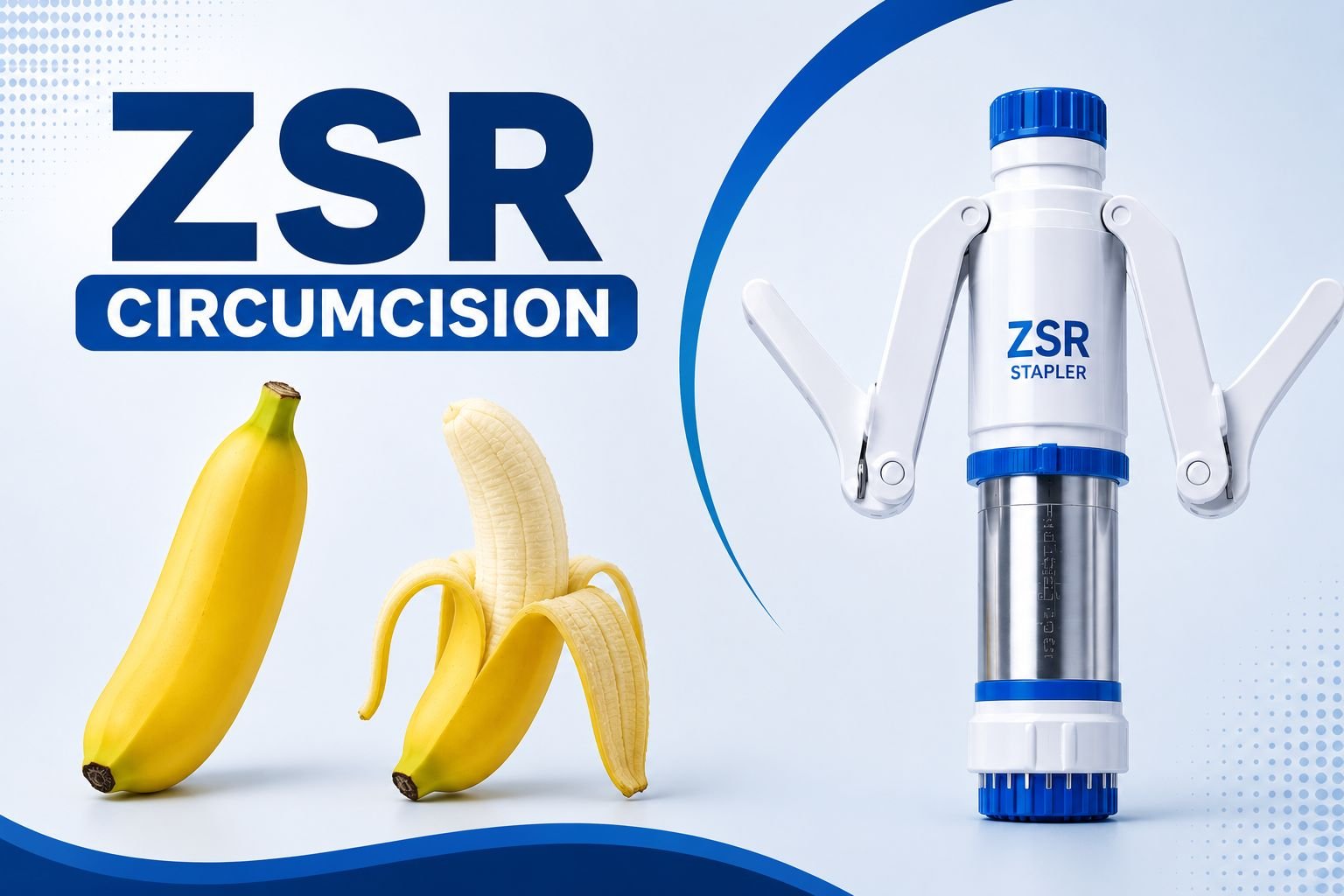
ZSR Circumcision is a minimally invasive circumcision technique that uses a specially designed circular stapling device to remove the foreskin and simultaneously seal the wound. Unlike traditional circumcision, which requires multiple stitches, ZSR technology allows the procedure to be completed in a more standardized and efficient manner.
Why Is Circumcision Performed?
Circumcision may be recommended for several medical conditions:
- Phimosis (tight foreskin)
- Recurrent balanitis (foreskin infections)
- Balanoposthitis
- Pain during retraction of foreskin
- Hygiene-related issues
- Paraphimosis
Some men may also choose circumcision for personal or cultural reasons.
How Has ZSR Circumcision Changed Surgery?
1. Shorter Procedure Time
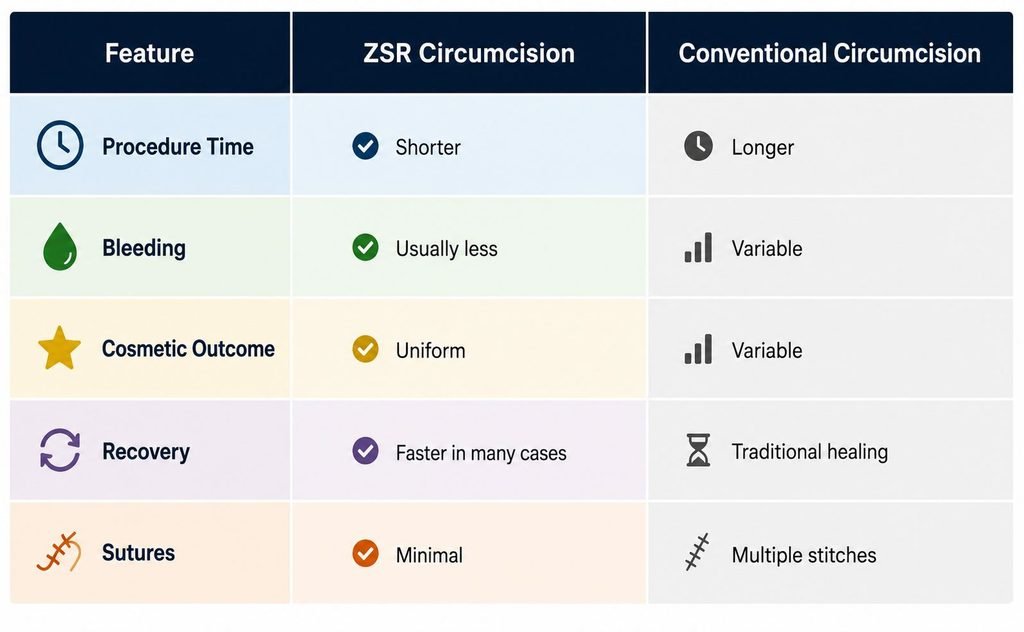
Traditional circumcision may take longer due to manual cutting and suturing. ZSR Circumcision is generally completed within minutes, making it one of the faster circumcision techniques available.
2. Reduced Bleeding
The stapling device cuts and seals tissue simultaneously. This often results in less intraoperative bleeding, a cleaner surgical field, and better patient comfort during the procedure.
3. Improved Cosmetic Appearance
Many patients are concerned about cosmetic outcomes. The circular stapling mechanism creates a uniform incision line that may provide a more even appearance after healing, compared with hand-sutured techniques.
4. Faster Recovery
Patients often return to routine activities sooner compared with conventional circumcision, with benefits that may include less postoperative discomfort, reduced wound care requirements, and a quicker return to work.
5. Standardized Surgical Technique
Traditional outcomes may vary depending on surgical technique. ZSR technology offers a more standardized approach, which can help achieve more consistent results across patients.
What Happens During ZSR Circumcision?
The procedure is usually performed under local or regional anesthesia. Steps include:
1. Measurement of foreskin size
2. Selection of the appropriate stapler device
3. Placement of the device
4. Simultaneous cutting and stapling
5. Completion of the procedure
No large external cuts or extensive suturing are required.
Who May Benefit From ZSR Circumcision?
ZSR Circumcision may be suitable for adults with phimosis, men with recurrent foreskin infections, those seeking a quicker recovery, and patients who prefer a modern circumcision technique. The final decision depends on individual anatomy and clinical evaluation by a urologist.
ZSR Circumcision vs Conventional Circumcision
Is ZSR Circumcision Painful?
The procedure itself is performed under anesthesia. Most patients experience mild swelling and temporary discomfort that gradually improves over a few days. Pain is generally manageable with prescribed medications.
Recovery After ZSR Circumcision
Typical recovery includes:
First Week: Mild swelling, minimal discomfort, routine walking possible.
Second Week: Significant improvement, return to most daily activities.
3–4 Weeks: Continued healing.
Recovery times vary among individuals, and your urologist will guide you on when to resume specific activities, including exercise and sexual activity.
Are There Any Risks?
Like any surgical procedure, complications can occur. Potential risks include infection, swelling, delayed healing, minor bleeding, and staple-related discomfort. Serious complications are uncommon when the procedure is performed appropriately and post-operative instructions are followed.
When Should You Consult a Urologist in Jaipur?
Seek evaluation if you experience:
- Tight foreskin
- Recurrent infections
- Pain during intercourse
- Difficulty retracting foreskin
- Repeated inflammation of the foreskin
Early treatment can prevent complications and improve quality of life. Men across Jaipur — including Vaishali Nagar, Mansarovar, Malviya Nagar, C-Scheme, and Jagatpura — as well as from other parts of Rajasthan such as Ajmer, Kota, Udaipur, and Jodhpur, can consult UROWALA for evaluation and ZSR circumcision.
Frequently Asked Questions (FAQs)
Q1. Is ZSR Circumcision better than laser circumcision?
Both are modern techniques. The best option depends on individual patient factors and surgeon evaluation, and your urologist can advise which is more suitable for you.
प्रश्न 1. क्या ZSR सर्कमसिज़न लेज़र सर्कमसिज़न से बेहतर है?
दोनों ही आधुनिक तकनीकें हैं। सही विकल्प मरीज़ की स्थिति और डॉक्टर के मूल्यांकन पर निर्भर करता है।
Q2. How long does ZSR Circumcision take?
The procedure is usually completed within a short time, often within minutes, once the patient is prepared and anesthesia has been given.
प्रश्न 2. ZSR सर्कमसिज़न में कितना समय लगता है?
यह प्रक्रिया आमतौर पर बहुत कम समय में, अक्सर कुछ मिनटों में पूरी हो जाती है।
Q3. Can adults undergo ZSR Circumcision?
Yes. It is commonly performed in adults, including those with phimosis or recurrent foreskin infections.
प्रश्न 3. क्या वयस्क ZSR सर्कमसिज़न करवा सकते हैं?
हां, यह वयस्कों में आमतौर पर की जाने वाली प्रक्रिया है, जिसमें फिमोसिस या बार-बार होने वाले संक्रमण वाले मरीज़ शामिल हैं।
Q4. How soon can I return to work after ZSR Circumcision?
Many patients return to routine work within a few days, depending on the nature of their occupation and how physically demanding it is.
प्रश्न 4. ZSR सर्कमसिज़न के बाद कितने दिनों में काम पर लौट सकते हैं?
कई मरीज़ कुछ ही दिनों में अपने काम पर लौट जाते हैं, यह उनके काम की प्रकृति पर निर्भर करता है।
Q5. Is circumcision necessary for phimosis?
In many cases of significant phimosis, circumcision remains one of the most effective and reliable treatments, particularly when other measures have not helped.
प्रश्न 5. क्या फिमोसिस के लिए सर्कमसिज़न ज़रूरी है?
गंभीर फिमोसिस के कई मामलों में सर्कमसिज़न सबसे प्रभावी और भरोसेमंद इलाज माना जाता है।
Key Takeaway
ZSR Circumcision represents an important advancement in circumcision surgery. By combining precision, reduced bleeding, faster recovery, and a more uniform cosmetic outcome, it has changed the way many patients experience circumcision treatment. For men dealing with phimosis or recurrent foreskin problems, modern circumcision techniques like ZSR offer an effective and reliable option worth discussing with your urologist.
—
About the Author
This article is medically reviewed by Dr. Mohit Sharma, MCh Urology (AIIMS), founder of UROWALA, Jaipur. Dr. Sharma performs modern circumcision techniques, including ZSR stapler circumcision, and specializes in phimosis treatment, men’s sexual health, and minimally invasive urological procedures.
Medical Disclaimer
This article is intended for general educational purposes only and does not constitute medical advice. Suitability for ZSR circumcision depends on individual anatomy and clinical evaluation. Please consult Dr. Mohit Sharma or another qualified urologist to determine the most appropriate circumcision technique for your condition.
Related Topics: [Phimosis Treatment](/phimosis-treatment) • [Balanitis](/balanitis) • [Men’s Sexual Health](/mens-sexual-health) • [UTI in Men](/uti-in-men) • [Paraphimosis](/paraphimosis)